


Public blockchains changed how money moves, but they also changed who gets to watch it move. Monero sits slightly apart from that evolution, designed for situations where traceability becomes a liability rather than a virtue. Monero’s entire ideology is founded on the principle that privacy actually matters, and that principle has driven the coin’s spectacular growth.
For years, cryptocurrency sold itself on transparency. Every transaction visible, every movement recorded, every balance traceable if you knew where to look. That promise worked when the audience was small and idealistic. It feels less comfortable now. In a digital economy shaped by permanent records, aggressive data collection, and expanding compliance rules, privacy needs to be more than a promise. If you care about who can see your financial activity and how long that information lives, privacy stops being a fringe concern. This is where Monero enters the conversation as a deliberate response to how public blockchains actually behave once they scale.
The Case for Privacy in a Fully Transparent Crypto World
Monero was launched in 2014 with a simple but unpopular idea: financial privacy should be the default, not an optional add-on. While Bitcoin popularised decentralised money, its public ledger made every transaction permanently visible. Research firms and analytics companies now routinely track wallet activity, cluster addresses, and link transactions to real-world identities once they touch regulated exchanges. This is important if you are trying to actually use crypto as money, rather than as a speculative asset.
Monero approaches the privacy question differently. Transactions are designed to be untraceable and unlinkable by default, meaning observers cannot see who sent funds or who received them, or how much changed hands. That design choice has kept Monero at the centre of privacy debates for more than a decade. It has also made it one of the most actively used privacy coins in the market, with millions of transactions processed annually and a network that continues to operate independently of large corporate backers.
Privacy becomes especially relevant in digital environments where discretion is expected rather than exceptional. In XMR casinos, Monero’s transaction model allows users to move funds without exposing balances or payment histories on a public ledger (https://www.vegaslotsonline.com/crypto-casinos/monero/). The appeal is not spectacle. It is the practicality of using a system that does not broadcast your financial behaviour to the world.

How Monero Keeps Transactions Private by Design
At a technical level, Monero’s privacy is not a single feature, but a layered system that works automatically every time you send funds. This is the key difference. You do not opt into privacy, and you cannot accidentally switch it off. Every transaction uses the same protections, which makes patterns harder to analyse at scale.
The first layer is ring signatures. When you send Monero, your transaction is grouped with several decoy transactions pulled from the blockchain. An outside observer can see that someone in that group sent funds, but cannot tell who. This alone breaks the direct sender trail that blockchain analytics rely on. The second layer is Ring Confidential Transactions, usually called RingCT. Instead of publishing transaction amounts on the public ledger, Monero hides them cryptographically while still allowing the network to verify that no new coins were created.
The final layer is stealth addresses. Each payment generates a one-time destination address that cannot be linked back to a public wallet. Even if someone knows your wallet address, they cannot scan the blockchain and reconstruct your payment history. Your wallet software does that privately, on your own machine.
This design puts Monero firmly in the category of privacy coins, a segment that blockchain analytics firms have tracked closely as regulators increased scrutiny of transparent blockchains. Chainalysis outlines how these systems differ from Bitcoin-style ledgers and why privacy coins resist traditional transaction tracing methods. The important point is not secrecy for its own sake. It is that Monero treats financial privacy as infrastructure, not behaviour.
Privacy, Fungibility, and Why Monero Is Not Bitcoin With a Cloak
One of the least discussed consequences of transparent blockchains is that money stops behaving like money. On Bitcoin, every coin carries a visible history. If a unit has passed through a hacked exchange, a sanctioned wallet or an illicit marketplace, that trail stays attached forever. In practice, this creates clean coins and tainted coins, even though the protocol treats them as identical. Exchanges already act on this distinction by freezing deposits or flagging addresses linked to past activity.
Monero was built to avoid that outcome. Because transaction histories cannot be reconstructed, every unit of Monero is interchangeable with every other unit. This property is known as fungibility, and is important if you want a currency to function without social or institutional judgment layered onto each transaction. You do not need to worry about where a coin came from, because there is no visible way to prove it.
Bitcoin’s transparency also creates behavioural side effects. If you reuse addresses or transact from a known wallet, anyone can estimate your balance, track your spending patterns, and infer relationships. That might be acceptable for a public donation address. It feels different when you are paying for services, moving personal funds or interacting with online platforms over time.
Monero removes that exposure by design. Balances are not public, spending patterns are not reconstructable and transaction graphs do not reveal social networks. The result is less spectacle and fewer analytics, but a system that behaves more like cash in a digital environment.
Mining and Decentralisation Drives Network Resilience
Privacy is only part of Monero’s design. The other pillar is how the network is secured. While many blockchains have drifted toward industrial-scale mining, Monero has taken deliberate steps to keep participation open. Its proof-of-work algorithm, RandomX, is optimised for general-purpose CPUs rather than specialised mining hardware. That choice is not cosmetic. It shapes who can realistically help secure the network.
On Bitcoin, mining has consolidated around large operators running warehouses of ASIC machines. That concentration brings efficiency, but it also creates choke points. A small number of pools now control a significant share of global hash power, which raises questions about influence and vulnerability. Monero’s approach spreads that power out. If you have a reasonably modern computer, you can mine Monero without being instantly outcompeted by purpose-built hardware.
This has practical consequences. A more distributed mining base makes coordinated attacks harder to execute. Pulling off a 51 percent attack requires controlling a majority of the network’s computing power. When that power is spread across thousands of small participants rather than a handful of industrial farms, the barrier rises sharply. It also reduces the risk of sudden policy shifts by miners responding to regulatory or commercial pressure.
There is also a long-term incentive structure at play. Monero does not cap its total supply in the same way Bitcoin does. After the main issuance phase, it enters a tail emission that continues to reward miners indefinitely. The idea is simple. If you want a network to remain secure decades from now, miners need a reason to stay.
Using Monero Day to Day Starts With the Right Wallet
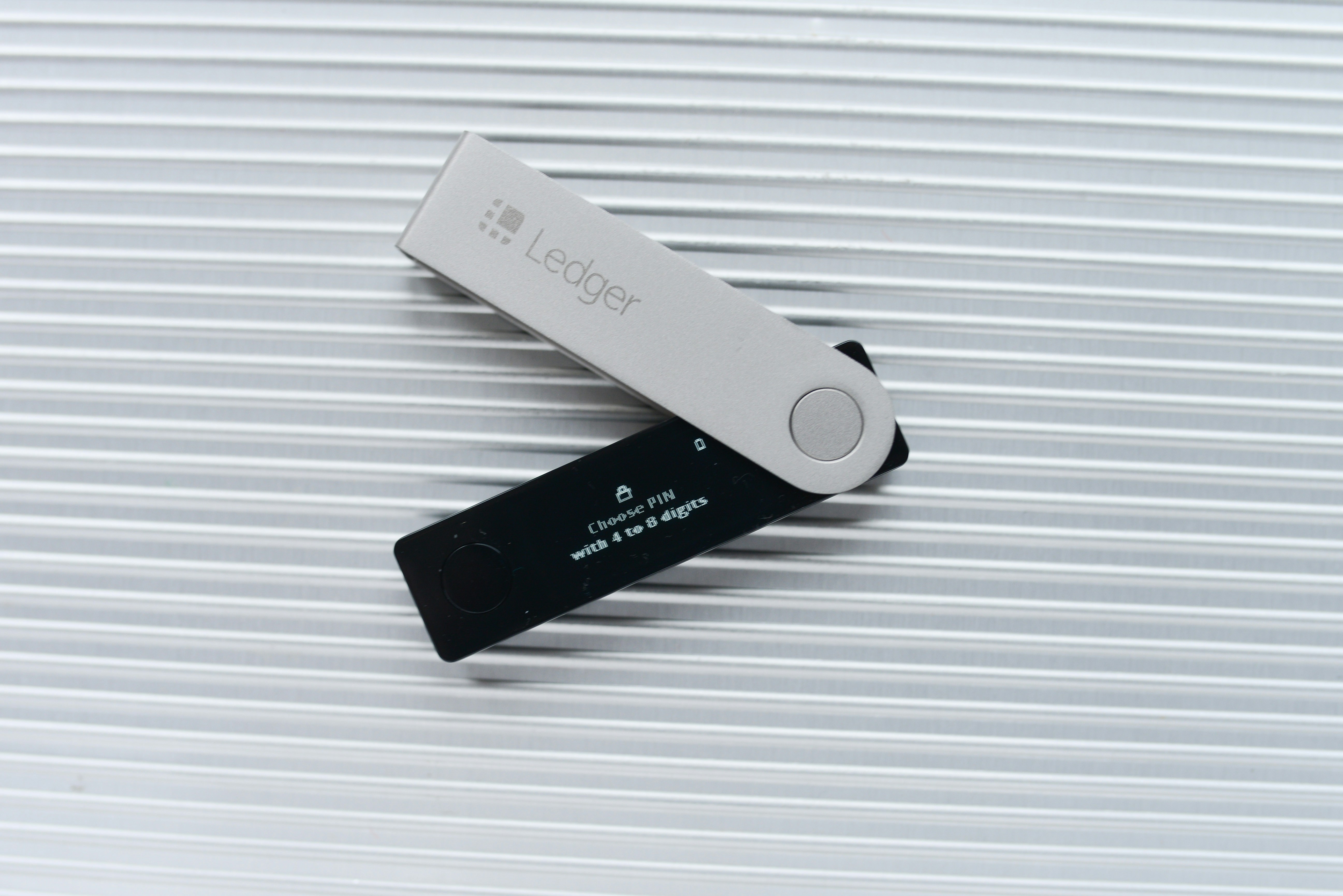
Monero’s privacy features only work if you interact with the network through software that understands how those protections are applied. Unlike transparent blockchains, your wallet does more than show balances and send transactions. It scans the blockchain for stealth addresses linked to your keys, calculates what you can spend and constructs transactions that blend into the wider network. From your side, it feels ordinary. Under the hood, it is doing far more work than a typical crypto wallet.
This is a big deal if are using Monero regularly. Wallets handle key management, transaction construction and local verification, all without exposing your activity to the public ledger. You are not publishing balances or reusing visible addresses. Each payment stands on its own, which keeps patterns from forming. That design reduces the risk of someone profiling your spending habits simply by watching the chain.
Managing digital assets relies on secure key storage, controlled transaction signing, and software that mediates how funds move across a network. Wallets sit at the centre of that process, handling balances, permissions, and transaction construction in the background. Monero wallets build on those same foundations, but extend them to support stealth addresses and private balance scanning without exposing activity on a public ledger.
For a clear visual explanation of why Monero behaves differently from transparent blockchains, this video walks through the mechanics in plain language:
EMBED YOUTUBE VIDEO ON SITE HERE: https://www.youtube.com/watch?v=QrHsFZBab4U
The takeaway is straightforward. Privacy in Monero is not something you toggle on. It is built into how the software works every time you use it.
Why Monero Continues to be Relevant
Monero has never tried to be everything to everyone. It does not chase headlines, promise frictionless compliance or lean on spectacle. What it offers instead is consistency. A system where privacy is not situational, fungibility is preserved, and participation is not limited to those with industrial resources. In a crypto economy that increasingly mirrors traditional finance, that stance feels intentional rather than nostalgic.
Whether you see Monero as a tool for discretion, a hedge against overexposed ledgers or simply a reminder of what decentralised money was meant to protect, its design choices remain relevant. The debate around privacy is not going away. As blockchains mature and scrutiny grows, Monero stands as a case study in what happens when privacy is treated as infrastructure, not an afterthought.