

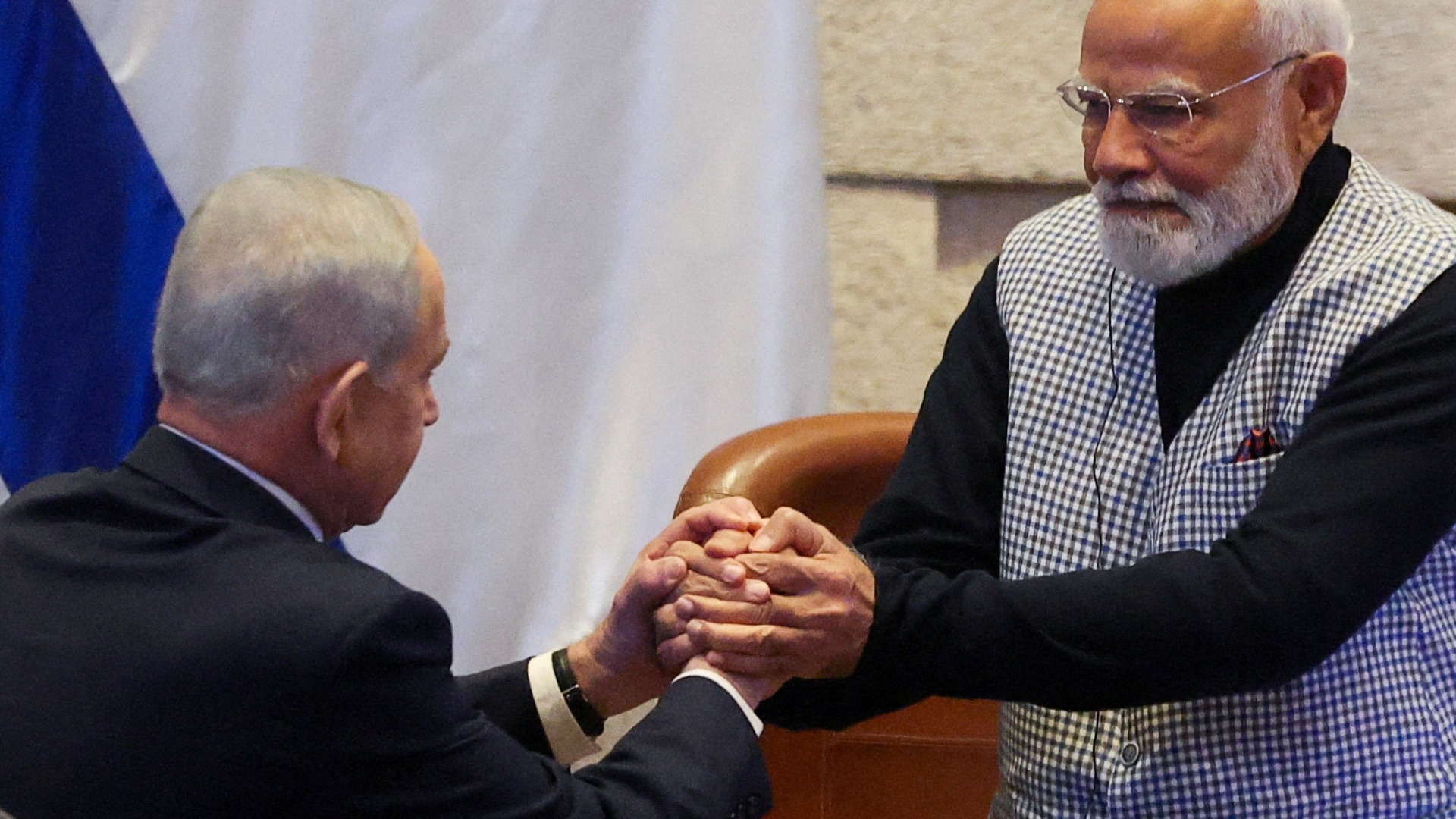
The red carpet is out in Tel Aviv, but the optics are as complicated as they are historic. Prime Minister Narendra Modi’s two-day visit to Israel marks a definitive departure from India’s historical “middle-path” diplomacy, officially elevating the relationship to a “Special Strategic Partnership.” While the official narrative celebrates a “significant leap ahead,” the move signals a deepening dependency on Israeli military tech and a formal alignment that mirrors Israel’s ties with the US. This shift raises a critical question: is India securing its future, or is it compromising its long-standing role as a neutral arbiter in the Global South?
The Cost of a Particular Partnership
Historically, India followed a policy of “de-hyphenation,” regarding its relations with Israel and Palestine as distinct entities. By closely aligning with Israel on sensitive technologies such as the Or Eitan laser system and AI-driven warfare, critics contend that India is unequivocally choosing a side.
This transition prompts inquiries regarding India’s sovereignty. Is India’s deep integration into Israeli defense “secrecy mechanisms” leading to excessive dependence on a singular source for its high-tech sustainability? In contrast to the US or Germany, India operates within a regional context where maintaining relations with the Arab world is essential for energy security and the well-being of millions of Indian expatriates.
The Geopolitical Balancing Act
The timing of this visit is especially delicate. PM Modi’s address to the Knesset and visit to Yad Vashem may signify a shift from India’s position as a leader of the Global South, given the “high-empathy” nature of his engagement with Israeli leadership.
For info read this article: Can India Bridge the Divide Between Israel and Gaza?
Defensive or Offensive
The Memoranda of Understanding concerning AI and quantum collaboration are presented as defensive strategies; however, in contemporary times, they serve as instruments of offensive cyber warfare. By assuming a principal role in these “disruptive technologies,” India transitions from its position as a non-aligned mediator to adopt a more aggressive stance in the global arena.
Moreover, the “mutual support in crises” provision in the new agreement lacks clarity. Can “standing by each other” indicate military support or merely diplomatic endorsement? For a nation such as India, which has historically eschewed foreign entanglements, this ambiguity constitutes a considerable risk.
Whether this deep dive into Israeli defense tech is a masterstroke or a strategic error depends entirely on how India manages the inevitable friction it will cause with its other regional partners.
For info read this article: From Gandhi’s Morals to Modi’s Missiles: The India-Israel Arms Bazaar
