
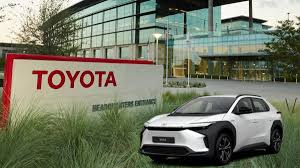
In a recent public appearance, former U.S. President Donald Trump sparked a surprising and somewhat humorous moment of confusion when he referred to Toyota’s CEO as “Mr. Toyoda” in a speech. While it was an innocent mistake, the slip-up quickly went viral, especially in the context of the ongoing developments surrounding Tesla and its Full-Self Driving (FSD) technology. For many, the moment was more than just a light-hearted gaffe—it underscored the broader landscape of the automotive industry, where brands like Toyota and Tesla are jockeying for position in the race towards fully autonomous vehicles.
Although Trump’s comment may have been unintentional, it has shed light on the contrasting approaches of two major automakers—Toyota’s cautious approach to autonomous driving and Tesla’s bold, often controversial stance on Full-Self Driving (FSD) technology. See Tesla FSD news this juxtaposition of approaches is critical as the future of autonomous vehicles begins to take shape, and it raises important questions about the direction the automotive industry is heading.
Tesla’s Bold Push for Full-Self Driving
Tesla has been at the forefront of the electric vehicle revolution, with its high-performance EVs changing the way people think about transportation. One of the most ambitious goals Tesla has set for itself is the development of Full-Self Driving (FSD) technology. Unlike the more conservative pace taken by some other manufacturers, Tesla has already rolled out a version of FSD in its vehicles, allowing for limited autonomous driving capabilities.
Tesla’s FSD system is designed to navigate streets, change lanes, park, and perform other driving functions with minimal input from the driver. The company’s CEO, Elon Musk, has frequently emphasized his vision of a future where fully autonomous vehicles are a common sight on the roads. Musk believes that Tesla’s advanced sensors and machine learning algorithms will ultimately lead to a fully autonomous driving experience.
However, Tesla’s FSD system has been subject to significant scrutiny and regulatory hurdles. Despite frequent updates, there have been several incidents involving Tesla’s FSD technology that have raised concerns about its safety and readiness for widespread use. In particular, Tesla’s reliance on cameras and sensors—rather than more traditional LIDAR (light detection and ranging) technology—has been criticized by experts who argue that the system is not yet ready to handle all driving conditions safely.
Despite these challenges, Tesla remains resolute in its pursuit of fully autonomous driving. The company continues to refine its software, and Musk has hinted that FSD may eventually be able to handle complex urban environments like downtown streets, offering a level of autonomy that few other manufacturers are currently attempting to achieve.
Toyota’s More Cautious Approach
On the other hand, Toyota has maintained a much more cautious stance when it comes to autonomous driving. The Japanese automaker, one of the world’s largest and most influential, has been slow to roll out fully autonomous systems. Instead, Toyota has focused on advanced driver assistance systems (ADAS) that provide features like lane-keeping assistance, adaptive cruise control, and collision avoidance.
Toyota’s cautious approach is rooted in the belief that the technology needs to be proven and reliable before it’s rolled out for mass adoption. The company has expressed concerns over the potential risks of premature deployment of autonomous vehicles. In fact, Toyota’s former chairman, Takeshi Uchiyamada, once said, “We will not rush into autonomous driving because we need to ensure the safety of our customers.”
Toyota’s strategy is also grounded in its significant investments in hybrid technologies and hydrogen fuel cells. With its focus on sustainability, Toyota wants to make sure that electric and autonomous vehicles are introduced in a way that balances environmental responsibility with human safety. Toyota is not completely opposed to autonomous driving; it has partnered with tech companies like Uber and Pony.ai to develop autonomous technology, but it remains more cautious about when and how this technology is deployed.
The Key Difference: Safety and Public Perception
One of the major differences between Tesla’s FSD and Toyota’s approach is the issue of safety and how the public perceives it. Tesla’s aggressive marketing of its FSD feature often leads to confusion about the system’s actual capabilities. Many drivers believe they can turn on FSD and completely disengage from the driving task. However, this is not the case. The system still requires constant supervision, and drivers are urged to keep their hands on the wheel at all times.
This has led to high-profile accidents and the perception that Tesla may be pushing the technology too fast. In contrast, Toyota’s focus on incremental advancements in driver assistance technology has built trust with customers who feel more comfortable with a gradual shift toward autonomy.
Public perception also plays a significant role in shaping the future of autonomous vehicles. As more automakers move toward electric and autonomous models, the question of when self-driving vehicles will be available for widespread use is a hot topic. While Tesla has created a sense of urgency around the future of autonomy, Toyota’s slower pace could appeal to consumers who are more concerned with safety and reliability.
Regulatory Hurdles and the Road Ahead
As both automakers continue to develop their autonomous technologies, regulation will play a crucial role in determining how quickly they can roll out these systems. In the United States, the National Highway Traffic Safety Administration (NHTSA) has been closely monitoring autonomous vehicles, and regulations are still being developed.
Tesla’s FSD system has already attracted the attention of regulators, with the NHTSA conducting investigations into the system’s safety features. In the meantime, Toyota is keeping a watchful eye on how regulatory frameworks evolve, knowing that any drastic shift in policy could significantly impact its autonomous vehicle strategy.
Conclusion: A Balanced Future for Autonomous Vehicles
While Tesla’s ambitious push for Full-Self Driving and Toyota’s more cautious approach may seem to be two opposite ends of the spectrum, both are valuable contributions to the conversation about the future of autonomous vehicles. Tesla’s innovations are moving the industry forward at a rapid pace, while Toyota’s careful approach ensures that safety and practicality remain top priorities.
As the technology matures and regulatory frameworks are put into place, we may find that the two automakers—and others—will find common ground. There is no doubt that the future of driving will be shaped by advancements in electric powertrains and autonomous technology. Whether through Tesla’s fast-tracked FSD system or Toyota’s focus on safer, incremental developments, both brands are playing an essential role in the automotive revolution.
The ultimate goal is clear: a future where driving is safer, more efficient, and more sustainable. The industry’s progress will continue to be driven by innovation, safety concerns, and consumer demand for smarter vehicles. With such a dynamic landscape ahead, the confusion over “Mr. Toyoda” will soon be forgotten, and the road ahead will be focused on the true advancements shaping the future of transportation.