

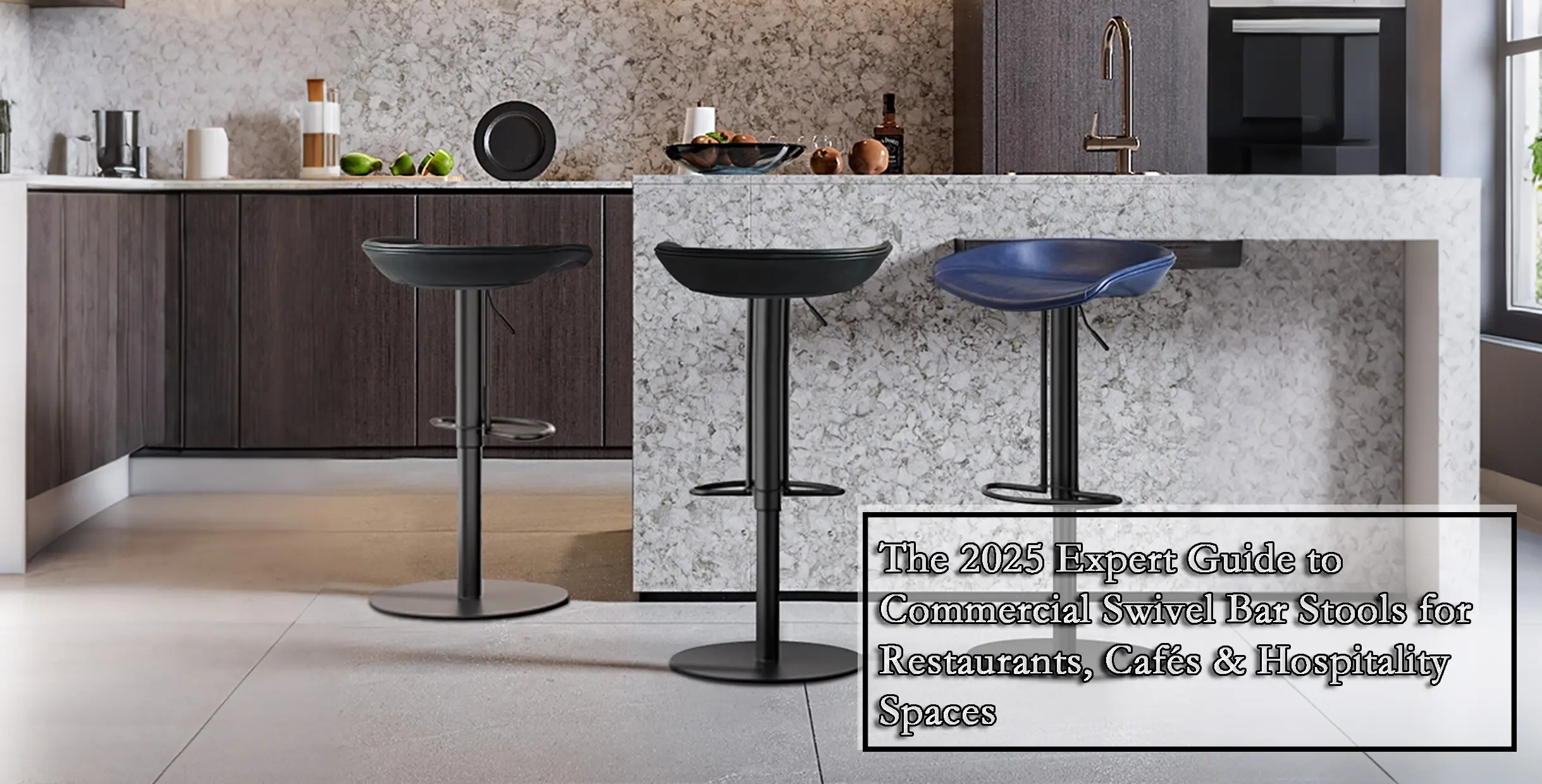
Walk into any busy bar on a Friday night, and you will notice something interesting. People are not just sitting. They are turning, leaning, shifting, and engaging. The energy moves in circles. Conversations overlap. Bartenders glide from guest to guest. In spaces like this, furniture is not just décor. It is infrastructure.
Bars and lounges across the United States generate billions in annual revenue, with food and beverage sales heavily dependent on seat occupancy and dwell time. In that environment, every design decision affects profitability. While swivel bar stools may seem like a small upgrade, they can quietly reshape guest experience, staff efficiency, and revenue potential in powerful ways.
Guest Flow and Social Energy Improve Instantly
Think about how people actually behave at a bar. They rarely sit still. They turn to greet friends. They pivot toward live music. They look over their shoulder to signal the bartender. Fixed seating resists that movement. Swivel bar stools embrace it.
When guests can rotate freely, they interact more naturally with their surroundings. They do not need to drag stools across the floor or awkwardly shift their entire bodies. The motion feels effortless, which reduces friction in crowded spaces. That small mechanical feature supports a bigger emotional outcome: comfort.
From a business perspective, comfort translates into longer stays. Longer stays often mean additional drink orders, desserts, or appetizers. Even a modest increase in average check size, multiplied across hundreds of weekly guests, can significantly affect monthly revenue.
Swivel stools also enhance social connectivity. In lounges that host DJs, sports broadcasts, or live performances, guests can easily reorient toward entertainment without leaving their seats. This flexibility keeps them engaged and less likely to move to another venue mid evening.
Operational Efficiency Behind the Bar
The benefits are not limited to guests. Bartenders and servers experience them as well.
In high-volume environments, speed matters. When guests can rotate toward the bar rather than forcing staff to maneuver around rigid angles, ordering becomes smoother. Eye contact is established faster. Drink delivery is quicker. Communication feels more direct.
Over time, these micro efficiencies compound. A bartender who saves just a few seconds per interaction can serve more guests during peak hours. In venues where revenue per seat per hour is closely monitored, that difference can be meaningful.
There are also practical considerations:
- Swivel mechanisms reduce the need for guests to scrape stools across the floor, minimizing noise and surface damage.
- High-quality commercial swivel bases are designed for thousands of rotations and support heavy daily traffic.
- Many models feature reinforced frames and footrests, adding stability while preserving flexibility.
Bars that invest in contract-grade swivel stools often experience fewer maintenance issues than those with lower-quality fixed alternatives. Durability paired with functionality supports both short-term operations and long-term cost control.
Space Optimization and Layout Flexibility
Square footage is one of the most expensive assets in hospitality. In major cities, commercial rent per square foot can be a critical line item. Every seat must justify its place on the floor plan.
Swivel bar stools help maximize tight layouts. In narrow bars or U-shaped counters, guests can rotate in and out of their seats without having to pull them far back. This is especially valuable in lounges where standing room and seated guests share the same circulation paths.
Designers often struggle with balancing density and comfort. Pack too many stools into a line, and the space feels cramped. Leave too much space,e and revenue potential drops. Swivel functionality provides a middle ground. Guests feel less boxed in because they can move freely within their footprint.
In rooftop lounges or compact cocktail bars, this feature becomes even more important. The ability to pivot toward city views, conversation partners, or the bartender enhances perceived spaciousness without requiring additional square footage.
Elevating Brand Perception Through Experience
Modern hospitality brands understand that subtle details shape perceptions. Guests may not consciously think, “This stool swivels smoothly,” yet they absolutely notice how a space feels.
A well-engineered swivel stool that rotates quietly and fluidly communicates quality. It signals that the venue considered user comfort at a granular level. In premium cocktail lounges or upscale hotel bars, that perception supports higher pricing strategies.
Design also plays a role. Swivel bar stools are available in upholstered, metal, wood, and mixed material styles. When paired with cohesive lighting, countertops, and flooring, they contribute to a polished aesthetic.
Consider the rise of experiential nightlife. Many urban lounges now compete not only on drinks but on ambiance and shareable moments. Guests photograph interiors and post them online. Seating that allows easy repositioning toward focal points, such as a backlit bar wall or performance stage, increases the likelihood of social media exposure.
In a competitive market where customer acquisition costs continue to rise, organic promotion through guest-generated content has real value.
Supporting Revenue Per Seat Metrics
Operators often track key performance indicators such as average revenue per seat, table turnover rates, and dwell time. Seating influences all three.
Swivel bar stools encourage guests to stay engaged rather than disengaged. When someone can comfortably rotate between conversation and bar interaction, they are less likely to feel isolated. This subtle comfort can positively extend visit duration.
At the same time, the ease of entry and exit supports efficient turnover during busy periods. Guests can slide off and rotate out without disrupting neighboring seats. Staff can reset the area quickly for the next party.
Industry data suggests that improving seating comfort can increase repeat visit likelihood. In bars and lounges, where loyalty often depends on atmosphere as much as menu quality, that repeat business drives stable cash flow.
The financial case becomes clear when viewed holistically. A modest investment in high quality swivel seating can contribute to:
- Higher average check values
- Smoother peak hour service
- Reduced floor wear and maintenance
- Stronger guest satisfaction scores
Over months and years, these incremental gains build measurable competitive advantage.
Designing for Different Bar Concepts
Not all bars are the same. A sports bar with multiple large screens has different seating priorities than an intimate jazz lounge. The versatility of swivel stools makes them adaptable across concepts.
In sports driven venues, guests can rotate between screens without leaving their seats. In music focused lounges, they can turn toward the stage during performances. In cocktail bars, they can pivot for private conversation while still maintaining easy access to the bartender.
Height options also matter. Standard bar height stools typically align with 40 to 42 inch counters, while counter height models suit 36 inch surfaces. Selecting the correct proportion ensures ergonomic comfort, which further enhances the guest experience.
When these details are thoughtfully executed, seating becomes an active contributor to brand identity rather than a passive background element.
A Strategic Upgrade With Long Term Impact
Furniture decisions are often viewed as upfront expenses. Yet in hospitality, they function as long term investments.
Swivel bar stools combine mechanical functionality with experiential value. They improve how guests interact, how staff operate, and how space is utilized. They reduce noise and wear. They support social energy. They align with modern expectations of flexibility and comfort.
For bar and lounge owners looking to sharpen their competitive edge, the question is not whether seating matters. It is how intentionally it is chosen.
In an industry where margins can be tight and competition relentless, even a small design advantage can ripple outward. The simple ability to turn, smoothly and effortlessly, may be one of the most underestimated business tools on the floor.