

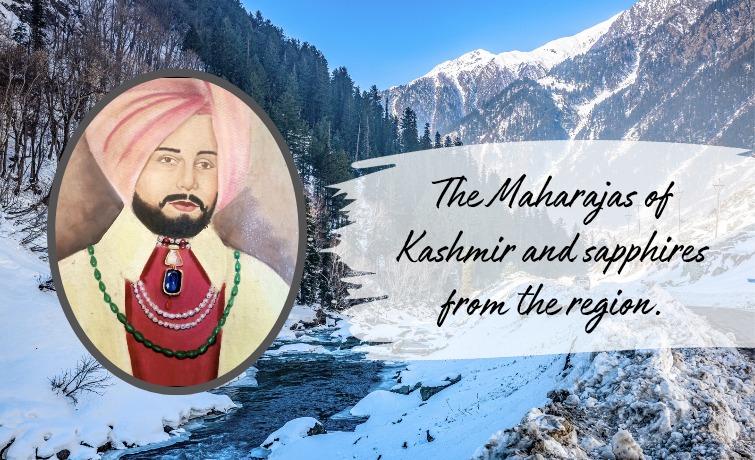
The Kashmir blue sapphire occupies a unique and almost mythical position in the world of fine gemstones. Revered for its velvety blue color, soft glow, and unmatched elegance, the Kashmir sapphire is widely regarded as the finest sapphire ever discovered. The Maharajas of Kashmir understood the exceptional value of these gems from the very beginning and attached great importance to the controlled trade of Kashmir sapphires. Their approach to sapphire mining and commerce reflected both royal stewardship and a broader vision for the economic development of the region.
Sapphire deposits in Kashmir were discovered in the late 19th century, high in the Zanskar range of the Himalayas, at altitudes exceeding 4,000 meters. The harsh terrain, extreme weather, and short mining seasons made extraction exceptionally difficult. Yet, what emerged from these mines stunned the global gem trade and high budget collectors. The earliest mining locations yielded sapphires of extraordinary quality, stones displaying a deep cornflower blue with a distinctive velvety texture caused by microscopic rutile inclusions. These early finds remain unmatched in beauty and rarity.
TWO PROMINENT KASHMIR SAPPHIRES
Two legendary precious stones stand as symbols of this extraordinary period: The Spirit Of Kashmir Sapphire and the Zanskar Crown Sapphire. Both gems are linked to the earliest and most productive phase of mining, a time when nature revealed its finest creations before the deposits were rapidly exhausted.
The Maharajas of Kashmir were keenly aware that these sapphires were not merely luxury items but strategic assets. Trade in fine Kashmir sapphires brought international attention and revenue to the region. The gems were sought after by European royalty, collectors, and major jewel houses, quickly establishing Kashmir as a legendary source alongside Golconda diamonds and Burmese rubies. However, unlike other gemstone regions that sustained mining over centuries, the Kashmir sapphire mines depleted in a remarkably short span of time. By the early 20th century, commercial mining had virtually ceased, leaving behind only small, sporadic finds.
Despite the limited output, the royal treasury of Kashmir retained some priceless Kashmir blue sapphires. These stones symbolized both wealth and sovereignty. Yet, the story of Maharaja Pratap Singh and the Zanskar Crown Sapphire reveals a deeper narrative, one rooted in responsibility, sacrifice, and commitment to regional development.
Maharaja Pratap Singh, who ruled Jammu and Kashmir from 1885 to 1925, was known for his progressive outlook. His reign coincided with the peak and subsequent decline of sapphire mining. Faced with the challenges of infrastructure development, administration, and social reforms in a geographically demanding region, the Maharaja made decisions that placed the welfare of Kashmir above personal or dynastic luxury.
Zanskar Crown Sapphire
The Zanskar Crown Sapphire was among the most magnificent sapphires ever recovered from the region. Believed to originate from the earliest mining zones, the stone displayed the quintessential Kashmir blue, rich yet soft, with the signature velvety appearance that collectors prize above all else. Its size, clarity, and color placed it among the rarest sapphires known, making it a gem of historic importance.
Rather than retaining the Zanskar Crown Sapphire as a permanent royal possession, Maharaja Pratap Singh chose to sell the stone. The proceeds from this sale were directed toward the development of the Kashmir region, including infrastructure, governance, and public welfare. This act bears testimony to the Maharaja’s understanding that long-term progress outweighed the prestige of holding a single, albeit legendary, gemstone. In an era when royal treasuries often prioritized accumulation, this decision stands out as both pragmatic and visionary.
The Spirit Of Kashmir Sapphire
The Spirit Of Kashmir Sapphire, on the other hand, represents the pinnacle of what Kashmir’s mines could produce. Recognized today as the largest known Kashmir blue sapphire, the Spirit Of Kashmir is admired not only for its size but for its exceptional color consistency and texture. The gem embodies the defining characteristics of Kashmir sapphires: a deep yet luminous blue, evenly distributed color, and a soft, glowing appearance under light. Its name reflects the soul of the region, a gemstone shaped by extreme geological conditions and preserved through centuries.
MORE THAN JUST SAPPHIRES
What makes both the Spirit Of Kashmir Sapphire and the Zanskar Crown Sapphire particularly significant is the context of their formation and discovery. These stones were mined during a brief geological and historical window, one that has never been replicated. Later attempts to revive mining in the region have failed to produce sapphires of comparable quality, reinforcing the belief that true Kashmir sapphires belong to a closed chapter of gem history.
The legacy of the Maharajas of Kashmir in the sapphire trade is therefore not solely about wealth or luxury. It is about stewardship of a natural treasure, careful engagement with global markets, and the willingness to convert rare assets into tangible benefits for society. Maharaja Pratap Singh’s sale of the Zanskar Crown Sapphire symbolizes this philosophy, demonstrating that the true value of a gemstone lies not only in its rarity but in how it is used.
KASHMIR SAPPHIRES TODAY
Today, Kashmir sapphires are among the most coveted gemstones in the world, commanding record prices at auctions and occupying the highest tier of private collections. Their rarity is absolute, their origin legendary, and their history inseparable from the Maharajas who once governed their fate. The stories of the Spirit Of Kashmir Sapphire and the Zanskar Crown Sapphire continue to fascinate gem lovers, historians, and collectors alike, serving as enduring reminders of a brief yet extraordinary moment in gemstone history.