

In modern football, the selectionbasic formations in footballMatching the right formation is the foundation that determines each team’s playing style. From the Premier League to La Liga, every coach has their own approach to tactical formations. A well-structured formation not only optimizes the abilities of each player but also creates a balance between attack and defense.
This article,xoilactv This will analyze the most popular formations, from the traditional 4-4-2 to the attacking 4-3-3, along with the tactical trends shaping contemporary football.
Basic formations in football
Introduction to basic formations in football
Basic formations in footballThis refers to the arrangement of the 11 players on the field, often denoted by numbers such as 4-4-2, 4-3-3, or 3-5-2. Each formation reflects the coach’s own philosophy on how to control the game.
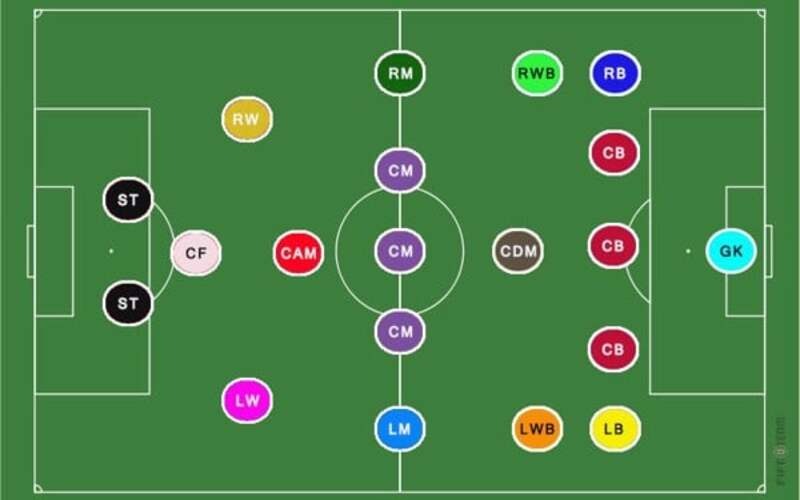
A basic formation in football is the arrangement of 11 players on the field.
Throughout its development, football KQ Bóng Đá has witnessed an evolution from purely attacking formations to more balanced systems. The 2-3-5 formation was popular in the 1950s and 1960s, but it gradually gave way to modern formations as football became more professional.
Flexibility is key. Top teams are no longer bound by a fixed formation but frequently change it during a match.
The most common tactical diagrams
4-4-2 formation: The most balanced and common formation.
The 4-4-2 formation is a basic formation in football.
Structure and positional assignments in a 4-4-2 formation.
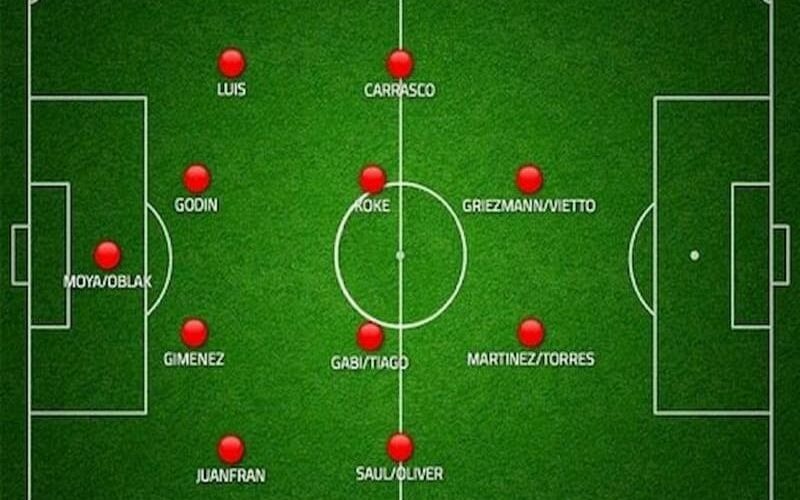
The 4-4-2 formation isXoi Lac TVThe defensive line is considered a basic formation in football with an even distribution: 4 defenders, 4 midfielders, and 2 forwards. The defense consists of 2 center-backs and 2 wing-backs, creating a solid defensive line. In the middle of the field, the 4 midfielders can be arranged in a flat line or a diamond shape.
The strike partnership typically consists of a tall, strong player acting as a pivot and a versatile, off-the-ball striker. The diamond 4-4-2 variant places an attacking midfielder behind the two strikers, while the flat 4-4-2 distributes the force evenly across the width.
Advantages and disadvantages of the 4-4-2 formation.
The biggest advantage of the 4-4-2 formation is its balance and ease of organization. This formation suits many playing styles, from counter-attacking to direct attacking. Players easily understand their roles, helping the team maintain a tight defensive structure.
However, when facing a team that plays with three central midfielders, the midfield can be outnumbered. Atletico Madrid under Diego Simeone and Leicester City in the 2015-2016 season are prime examples of the effectiveness of the 4-4-2 formation.
4-3-3 Formation: An attacking and ball-controlling formation.
Key features of the 4-3-3 formation
When Xoilac TVmention sIn a 4-3-3 formation, people immediately think of a forward trio consisting of a central striker and two wingers. Its strength lies in its ability to create width on the pitch, forcing the opposing defense to spread out and leave gaps.
Three central midfielders create a numerical advantage in the midfield, allowing the team to control the tempo of the game. Typically, one defensive midfielder plays deep while the other two provide support in both directions. Wingbacks need to be physically fit and technically skilled to participate in attacks regularly.
The philosophy of attack and its practical application.
The 4-3-3 formation is designed for high ball control and creating numerous attacking opportunities from the flanks. The wing players constantly cut inside or move wide, making the game unpredictable. The flexible positional rotation among the three forwards makes it difficult for opponents to mark them.
Pep Guardiola’s Barcelona, with their Messi-Villa-Pedro trio, is the perfect example. Jurgen Klopp’s Liverpool also employs this formation with their characteristic gegenpressing style. A pseudo-4-3-3 variant with a withdrawn striker like Firmino or Benzema adds further variety.
3-5-2 formation: A flexible formation with a deep midfield.
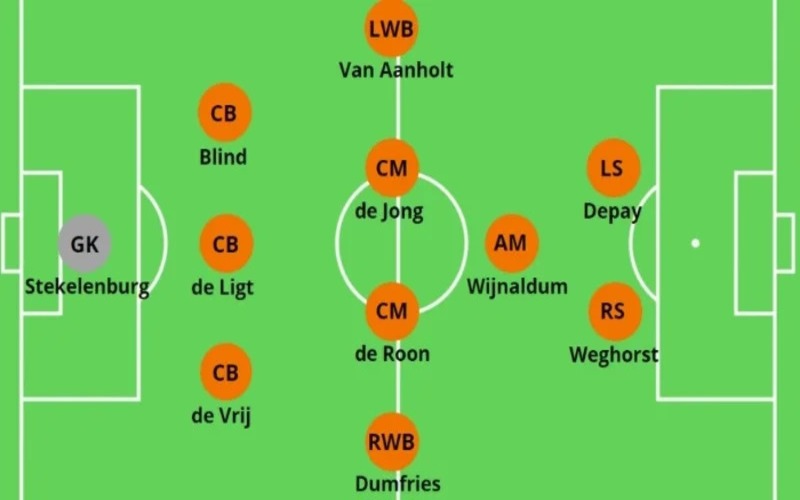
The 3-5-2 formation uses three central defenders combined with two wingbacks.
Structure and role of each position
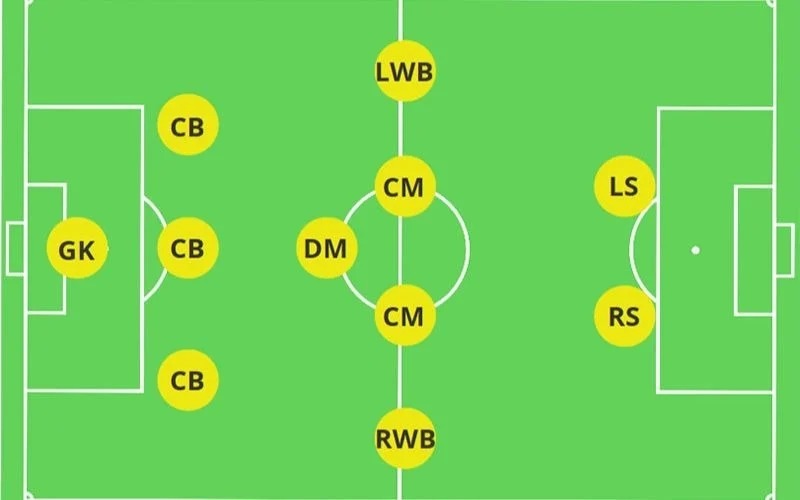
The 3-5-2 formation utilizes three central defenders combined with two wingbacks acting as full-backs. Five midfielders create dominance in the central area, with the two wingbacks running down both flanks. The two strikers support each other, one acting as a anchor while the other makes flexible runs.
The biggest requirement of this diagram is thatXoilac TVpresent the mainThis is a matter of the wingbacks’ physical fitness. They must constantly move from their own penalty area to the opponent’s penalty area. The three central defenders need to have good situational awareness to compensate for the lack of dedicated full-backs.
When should you use the 3-5-2 formation?
Football expertsXoilacTVstated,The 3-5-2 formation is effective when a team wants to control the midfield. With five midfielders, the team has a numerical advantage against most opposing formations. This formation is also effective against teams that play with two strikers.
Inter Milan under Antonio Conte used a 3-5-2 formation to win Serie A 2020-2021. Thomas Tuchel’s Chelsea also adopted a 3-4-3 variant to win the Champions League 2021, demonstrating the effectiveness of a three-centre-back system.
Other tactical diagrams are becoming popular.
The 4-2-3-1 formation: Modern balance
The 4-2-3-1 formation combines two defensive midfielders, three attacking midfielders, and a single striker. The two defensive midfielders form a shield in front of the back line, while the three attacking midfielders have creative freedom. This formation flexibly switches between defense and attack, adapting to various situations. Real Madrid and Manchester City frequently use the 4-2-3-1 formation with their own variations.
3-4-3 Formation: All-out Attack
The 3-4-3 formation is similar to the 3-5-2 but pushes higher with three forwards instead of two. This formation creates constant pressure on the opponent’s defense, making it suitable for teams with a strong attacking style of play.
Trends in tactics and formations in modern football.
Flexibility in changing the lineup
Top teams today are no longer tied to a single formation. They frequently switch during matches, from a 4-3-3 in attack to a 4-5-1 in defense. This adaptability requires players to be versatile, capable of playing multiple roles. Players like Joshua Kimmich, Trent Alexander-Arnold, and Joao Cancelo have become valuable assets thanks to their ability to play in various positions.
Technology and data analytics in team selection.
Data analytics technology has changed the way coaches select their lineups. Through metrics such as distance covered, touches, and pass completion rate, coaching staff can accurately assess the effectiveness of each formation. Opponent analysis has also become more detailed, helping teams adjust their lineups accordingly.
Conclude
Through analysis ofbasic formations in footballFrom the balanced 4-4-2 and the attacking 4-3-3 to the flexible 3-5-2, it’s clear that no formation is absolutely perfect. Each formation has its own advantages and disadvantages, depending on the coach’s philosophy and the quality of the players. The most important factor is flexibility and adaptability. Successful teams are those that know how to maximize their strengths and exploit their opponents’ weaknesses.
