

The 2016–17 Bundesliga season was built for over bettors: 877 goals in 306 games worked out to almost 2.9 goals per match, and several clubs consistently turned their fixtures into high‑tempo, chance‑heavy contests. Understanding which attacks drove those numbers, and why, lets you see when backing the “over” followed logic rather than hope.
Why 2016–17 Was Friendly to Over Bettors
League‑wide, the combination of aggressive pressing, fast transitions and relatively open defending made Germany’s top flight a fertile ground for goals in 2016–17. The final statistics show an average of 2.87 goals per match, confirming that many fixtures pushed past common lines around 2.5 without needing freak scorelines. However, those goals were not spread evenly: teams with powerful forward lines or less controlled defences, like Borussia Dortmund and several mid‑table sides, were involved in disproportionate numbers of high‑scoring games, meaning that using team identity rather than league averages was the key to finding sensible over positions.
Bayern Munich: Controlled Firepower, Not Pure Chaos
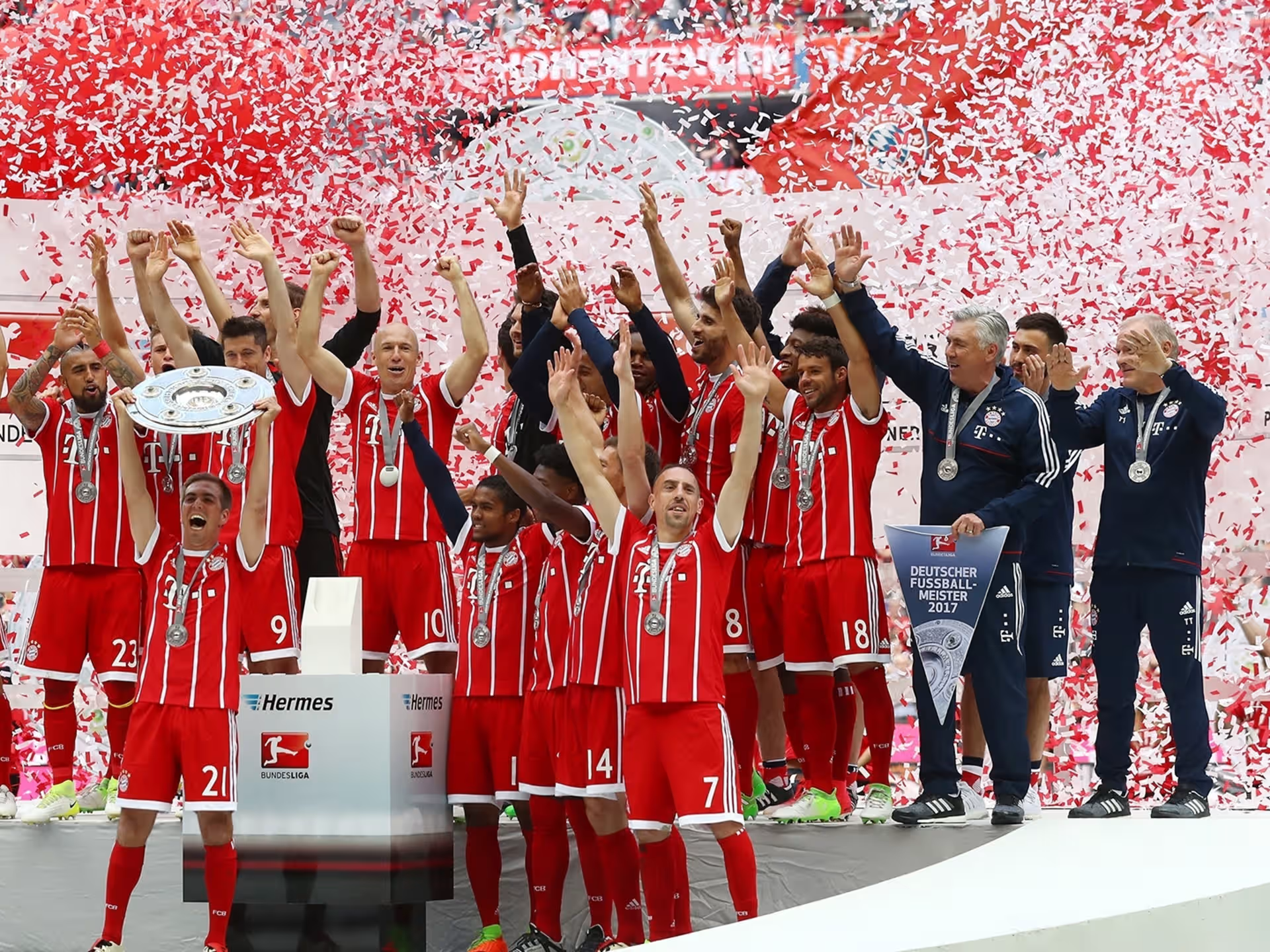
Bayern Munich finished as champions with 89 goals scored and just 22 conceded, giving them the league’s best attack and defence in raw terms. Their matches often featured at least two or three goals because they regularly broke down opponents, but their defensive control kept many fixtures from turning into end‑to‑end shootouts, especially when they managed a lead and limited counter‑attacks. From an over‑betting perspective, Bayern were reliable in the sense that they frequently contributed multiple goals, yet their ability to shut games down meant that blindly backing the highest lines would not always be justified; context—opponent strength, stakes and rotation—mattered in deciding whether a game would stay clinical or become wild.
Borussia Dortmund: Elite Attack with a Leaky Back Line
If one club symbolised “over‑friendly” football in 2016–17, it was Borussia Dortmund. Pierre‑Emerick Aubameyang topped the scoring charts with 31 league goals, and Dortmund’s forward line produced enough output to keep them among the highest‑scoring sides in the division. At the same time, their defence conceded far more than Bayern’s, and matches like their 6–2 win over Bayer Leverkusen showcased how quickly Dortmund games could escalate into high‑margin victories or chaotic exchanges. The cause–effect pattern is clear: a potent attack combined with defensive looseness creates a wide distribution of match scores skewed towards higher totals, making over 2.5 and even higher Asian goal lines logically attractive when odds did not fully price in that volatility.
RB Leipzig: High‑Intensity Pressing and Vertical Threat
RB Leipzig’s first Bundesliga campaign ended with a second‑place finish, built on high‑energy pressing and quick, vertical attacks that created plenty of scoring opportunities. Matches like their 4–5 defeat to Bayern highlighted how their approach could produce flurries of goals at both ends, especially against opponents comfortable playing through pressure and exploiting space in behind. For bettors focusing on overs, Leipzig offered a different profile from Dortmund: their intensity and directness tended to make games fast and open, particularly when they faced teams that insisted on building from the back, which increased the likelihood of multiple high‑quality chances rather than careful, low‑risk contests.
Hoffenheim and Köln: Structured Attacks with Different Risk Profiles
Hoffenheim, under Julian Nagelsmann, combined tactical structure with effective attacking patterns, finishing fourth and losing only four times all season while scoring regularly enough to trouble most opponents. Their matches were often well‑controlled rather than chaotic, but their ability to create chances through rehearsed movements meant that overs could make sense when facing vulnerable defences that struggled with positional rotations. Köln, meanwhile, enjoyed a strong campaign with Anthony Modeste among the league’s top scorers, and their games could tilt towards higher totals when they met sides willing to trade crosses, set‑pieces and aerial duels, since that style generated frequent shooting opportunities even without extreme tempo.
Offensive Archetypes and Over‑Betting Implications
To make these differences practical, you can think in terms of archetypes rather than just names.
| Archetype | 2016–17 Examples | Over‑Betting Implication |
| Clinical powerhouse | Bayern Munich | Good for overs vs weak defences, but defence caps chaos |
| High‑attack, loose defence | Borussia Dortmund | Strong candidate for overs in many matchups |
| High‑press, vertical attacker | RB Leipzig | Overs attractive vs build‑up teams and open rivals |
| Structured, balanced attack | Hoffenheim, Köln | Spot‑dependent overs, best vs shaky or direct opponents |
Each archetype reflects a different mechanism for generating goals: some through relentless quality, some through tactical risk, some through systematised patterns. For over bettors, the crucial step is matching the archetype not only to the team but to the opponent and game state, rather than assuming that one label (“attacking”) has the same meaning in every matchup.
Using UFABET to Track and Refine Over Strategies
When a bettor wants to translate these attacking profiles into real stakes, their interaction with markets has to be as disciplined as their analysis. For someone choosing UFABET as their sports betting service, a practical approach is to build a simple log of every over bet placed on 2016–17‑style teams—recording whether it involved a Dortmund‑type high‑variance side, a Leipzig‑type pressing team, or a more structured attack—and then compare outcomes to pre‑match reasoning. By consistently checking whether overs on certain archetypes outperform others on ufa168, the bettor can refine their focus, shifting away from situations where aggressive reputations did not actually produce enough chances and towards fixtures where both tactical setups and historical scoring patterns truly support higher totals.
Where casino online Sits Compared to Over‑Focused Match Reading
Reading attacking profiles in a league like the 2016–17 Bundesliga relies on connecting style, personnel and past scoring patterns to the probability of future goal volumes. In a casino online context, however, the dynamics are entirely different: the house edge in slots, roulette or other table games does not respond to form, tactical shifts or player injuries. For bettors who enjoy both goal‑based football wagers and casino online activity, keeping this distinction clear matters; success in identifying high‑scoring match archetypes should inform only their sports betting, not fuel unrealistic expectations about overturning the built‑in edge of casino games, which operate on fixed odds rather than on interpretable team behaviour.
Key Factors That Turn an Attacking Team into a True “Over” Candidate
Not every team with a good forward line automatically justifies over bets; multiple conditions convert attacking potential into reliable goal volume. In 2016–17, matches tended to become strong over candidates when at least one of the following aligned with a recognised offensive archetype:
- The attacking team consistently produced high shot volumes and quality chances rather than relying on rare long‑range efforts.
- The opponent’s defensive structure showed clear weaknesses—slow centre‑backs, vulnerable full‑backs or poor set‑piece organisation—that attacking systems could exploit.
- Both teams favoured proactive approaches, pressing high and pushing full‑backs on, which opened space for transitions in both directions.
When these factors did not align—for example, when a strong attacking side met a deep‑sitting, compact defence content to play for a narrow loss—goals sometimes dried up despite the presence of prolific forwards. This reminds over bettors that style clashes and motivation can dampen even the most impressive attacking numbers if the game state encourages caution rather than open exchanges.
Summary
For over‑focused bettors, the 2016–17 Bundesliga showed that the best attacking teams are not just those with the highest goal totals, but those whose playing styles repeatedly create high‑tempo, chance‑rich matches. Bayern’s controlled dominance, Dortmund’s combination of elite attack and porous defence, Leipzig’s pressing‑driven verticality, and the structured but effective systems of Hoffenheim and Köln each produced different kinds of goal environments that either supported or limited over opportunities depending on opponent and context. When you map these archetypes, test them through disciplined use of betting tools, and keep them conceptually separate from forms of gambling that lack such structural signals, you turn “attacking team” from a vague label into a concrete framework for deciding when backing goals is truly justified.
