


In the rapidly evolving global economy of 2026, the lines between traditional business roles are blurring. A marketing manager is no longer just responsible for creative campaigns; they must understand customer acquisition cost (CAC) and lifetime value (LTV). An HR director is no longer just focused on talent; they must navigate the financial implications of remote-work taxation and employee equity. At the heart of this integration lies one core discipline: Finance.
For the modern business student, finance is not just a specialized major—it is the universal language of the corporate world. Whether you aspire to be an entrepreneur, a consultant, or a digital strategist, a strong foundation in financial principles is the differentiator between a tactical worker and a strategic leader.
The Universal Language of Decision-Making
Every business decision, regardless of the department, eventually filters down to the financial statements. When a project manager proposes a new software implementation, they are essentially making a capital budgeting decision. When a sales lead negotiates a contract, they are managing cash flow and credit risk. Without a baseline understanding of how money moves through an organization, business majors risk operating in a vacuum.
However, many students find the transition from general business theory to quantitative financial analysis daunting. The leap from “business strategy” to “financial modeling” is where most academic friction occurs. Recognizing this challenge early is key. Many successful graduates mention that utilizing specialized resources, such as professional finance assignment help, allowed them to master complex valuation models without falling behind in their core curriculum. By leveraging Myassignmenthelp, students can bridge the gap between abstract formulas and practical business applications, ensuring they don’t just “pass” the class, but actually internalize the logic behind the numbers.
Navigating the Complexity of the 2026 Market
The financial landscape has changed significantly over the last few years. We have seen the rise of decentralized finance (DeFi), the integration of AI-driven algorithmic trading, and a massive shift toward ESG (Environmental, Social, and Governance) reporting. For a business major, understanding these shifts is non-negotiable.
If you cannot read a balance sheet or interpret a cash flow statement, you cannot truly evaluate the health of a company. This “financial literacy gap” is a major reason why many startups fail within their first three years. Entrepreneurs often have great ideas but lack the “financial plumbing” to keep the business afloat during lean months. Understanding concepts like the Time Value of Money (TVM) and Weighted Average Cost of Capital (WACC) allows a business owner to make informed decisions about debt versus equity financing.
The Strategic Value of Academic Research
Beyond the classroom, the ability to identify and analyze emerging trends is what sets top-tier students apart. Academic excellence in 2026 requires more than just following a syllabus; it requires a deep dive into the “why” behind market shifts. This is especially true when it comes to long-form writing and thesis development.
Selecting a compelling research area is the first step toward becoming a thought leader in the business space. For those looking to stand out, exploring a curated list of finance research topics can provide the inspiration needed to tackle modern dilemmas like “The Impact of Carbon Credits on Corporate Valuation” or “The Role of AI in Risk Management.” These topics bridge the gap between finance and broader business sectors, making your academic work highly relevant to future employers.
Developing a “Finance-First” Mindset
To build a truly strong foundation, business majors should focus on three pillars of financial fluency:
- Quantitative Literacy: You don’t need to be a mathematician, but you must be comfortable with data. Being able to run a sensitivity analysis in Excel is now a “basic” skill in most corporate settings.
- Strategic Resource Management: Know when to seek help. The smartest business minds outsource tasks to specialists. Whether it’s hiring a CPA for a firm or using academic support services to master a difficult module, resource management is a leadership trait.
- Continuous Trend Analysis: Finance is not a static field. Staying updated on interest rate pivots by the Federal Reserve or shifts in global trade liquidity is essential for any business leader.
Bridging Finance and Professional Law
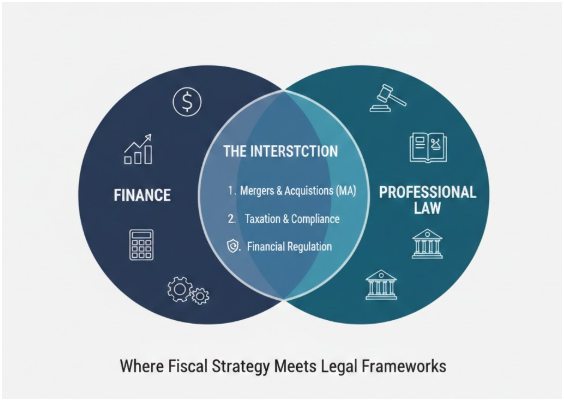
Interestingly, the intersection of finance and corporate law has become a massive growth area for business students. Every merger, acquisition, or IPO is as much a legal maneuver as it is a financial one. This is why many students now double-down on understanding the legal frameworks that govern financial transactions. Whether you are looking for law assignment help or finance-specific guidance, the goal is the same: to understand the regulatory environment in which capital operates.
Conclusion: The Competitive Edge
The “Business Major” of 2026 is expected to be a polymath. While you may specialize in Marketing, Operations, or Management, finance remains the thread that connects these silos. It provides the “proof” for your business theories and the “fuel” for your corporate strategies.
About The Author : Claudia Jaime
I am a business consultant and academic strategist dedicated to helping students bridge the gap between complex financial theory and real-world corporate application. With a background in business management, I specialize in identifying the core competencies—from fiscal literacy to regulatory compliance—that modern graduates need to thrive in a competitive market.
