

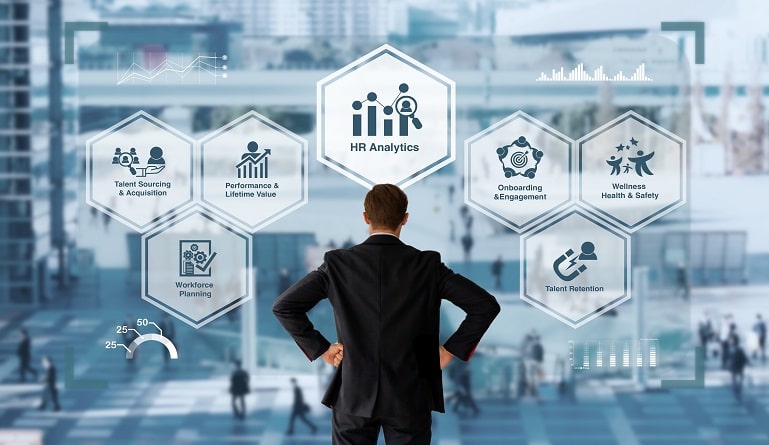
In today’s competitive business environment, data-driven decision-making is more crucial than ever. Companies are increasingly turning to HR analytics to gain insights into their workforce and drive strategic decision-making. HR analytics, also known as people analytics, involves the use of data collection, analysis, and modelling to understand, improve, and optimise the workforce for business success.
The Evolution of HR Analytics
Over the past decade, HR analytics has evolved from a simple reporting tool to a complex predictive model capable of influencing major business decisions. Initially used for basic reporting purposes, today, HR analytics includes sophisticated predictive analytics and machine learning algorithms to forecast trends and behaviours within the workforce.
Traditionally, HR departments relied on basic reporting for managing employee records, payroll, and compliance. However, as technology advanced, organisations realised the potential of harnessing their data to make informed decisions that improve productivity, reduce costs, and enhance employee satisfaction.
Benefits of Implementing HR Analytics
Organisations that effectively implement HR analytics can experience a wide range of benefits. Improved decision-making is perhaps the most significant advantage, as HR analytics provides data-driven insights that can significantly influence recruitment, retention, and workforce planning strategies.
Additionally, HR analytics aids in understanding employee engagement levels and identifying areas that require improvement. By analysing trends and patterns, companies can develop tailored strategies to boost morale and engagement, ultimately leading to increased productivity and success.
Beyond employee performance, predictive analytics within HR can help forecast skill shortages and plan for future staffing needs, ensuring that an organisation remains competitive in a dynamic market environment.
Key Metrics in HR Analytics
Several key metrics are crucial for effective HR analytics. These include employee turnover rates, recruitment efficiency, employee performance metrics, and employee satisfaction scores. Monitoring these metrics allows organisations to identify trends and potential issues within their workforce proactively.
For instance, tracking turnover rates can help HR teams understand the factors contributing to employee exits, enabling them to address these issues and improve retention strategies. Similarly, analysing recruitment efficiency metrics can reveal bottlenecks in hiring processes and suggest improvements for faster and more effective recruitment.
Challenges in Harnessing HR Analytics
Despite its benefits, implementing HR analytics comes with challenges. Data privacy and security concerns are paramount, as organisations must ensure that sensitive employee information is protected and used responsibly. Additionally, ensuring data accuracy and integrity is crucial for effective analysis.
Furthermore, developing the necessary skill set within HR teams to interpret and utilise complex data insights can be a significant barrier. Organisations must invest in training and development to empower their HR professionals with the skills needed to effectively harness HR analytics.
Future Trends in HR Analytics
The future of HR analytics looks promising, with emerging technologies such as artificial intelligence (AI) and machine learning driving innovation within the field. These technologies enable more sophisticated analysis, allowing companies to gain deeper insights and predictive capabilities.
As organisations continue to embrace digital transformation, integrating HR analytics with other business intelligence tools will become increasingly common. This integration will enable holistic decision-making by providing a comprehensive view of organisational performance and employee dynamics.
Conclusion
In conclusion, HR analytics is no longer a luxury but a necessity for organisations looking to stay competitive in today’s data-driven world. By leveraging HR analytics, companies can improve decision-making, enhance employee engagement, and optimise their workforce strategically.
As the field continues to evolve, staying up-to-date with the latest trends and technologies will be crucial for organisations seeking to maintain a competitive edge. Investing in HR analytics not only provides immediate benefits but also ensures long-term success and growth in an increasingly complex business landscape.