

Printed circuit boards are the foundation of modern electronic devices, providing the platform that allows components to communicate and function together. However, a bare printed circuit board alone cannot perform any electronic task until components are mounted and connected. This leads to a common question among engineers, product developers, and businesses entering the electronics industry: What is the PCB Assembly?
Understanding PCB assembly is essential because it represents one of the most important stages in electronics manufacturing. Whether producing smartphones, medical equipment, automotive systems, industrial controllers, or telecommunications devices, PCB assembly transforms a bare circuit board into a fully functional electronic product.
This article explains what is the PCB Assembly, how the process works, its importance, the technologies involved, and its role in modern electronics manufacturing.
What is the PCB Assembly?
To answer the question, “What is the PCB Assembly?” it is the process of mounting electronic components onto a printed circuit board (PCB) and creating the electrical connections required for the circuit to function.
The assembly process converts a fabricated PCB into a Printed Circuit Board Assembly (PCBA). Components such as resistors, capacitors, integrated circuits, connectors, transistors, and sensors are installed according to the circuit design.
Once assembly is complete and the board passes inspection and testing, it becomes a functional electronic unit that can be integrated into a larger device or system.
In simple terms, PCB fabrication creates the board, while PCB assembly creates the working electronic circuit.
Why PCB Assembly Is Important
Understanding what is the PCB Assembly also requires understanding its importance in electronics production.
Without PCB assembly, electronic components would remain disconnected and unable to perform their intended functions. Assembly creates the electrical pathways that allow power and signals to flow through the circuit.
High-quality assembly is critical because even minor defects can result in:
- Product malfunctions
- Reduced reliability
- Electrical failures
- Increased maintenance costs
- Customer dissatisfaction
Proper assembly ensures that electronic products perform consistently throughout their intended service life.
As electronic systems become more advanced, the role of PCB assembly continues to grow in importance.
The Main Stages of PCB Assembly
When discussing what is the PCB Assembly, it is helpful to understand the key manufacturing stages involved.
The process typically begins after PCB fabrication has been completed.
Manufacturers first review assembly documentation, including design files, bills of materials, and assembly instructions. Components are then prepared and verified before production begins.
The assembly process generally includes:
- Solder paste application
- Component placement
- Soldering
- Inspection
- Testing
Each stage contributes to the quality and reliability of the final product.
Careful process control is necessary to ensure consistent manufacturing results.
Solder Paste Application
One of the first steps in PCB assembly is applying solder paste to designated areas on the board.
Solder paste consists of tiny solder particles suspended in a flux medium. It is applied using a precision stencil that deposits the paste onto component pads.
Accurate solder paste application is essential because it directly affects solder joint quality.
Insufficient or excessive solder paste can lead to defects that impact assembly reliability.
This stage sets the foundation for successful component attachment during later manufacturing processes.
Component Placement
Another important aspect of understanding what is the PCB Assembly is learning how components are positioned on the board.
Modern assembly facilities use automated pick-and-place machines capable of placing thousands of components per hour with remarkable accuracy.
These machines read assembly data and position components onto the PCB according to design specifications.
Common component types include:
- Resistors
- Capacitors
- Inductors
- Integrated circuits
- Connectors
- LEDs
- Sensors
Proper component placement ensures that the circuit functions as intended and supports efficient soldering operations.
Soldering Process
Soldering is the stage where permanent electrical and mechanical connections are created.
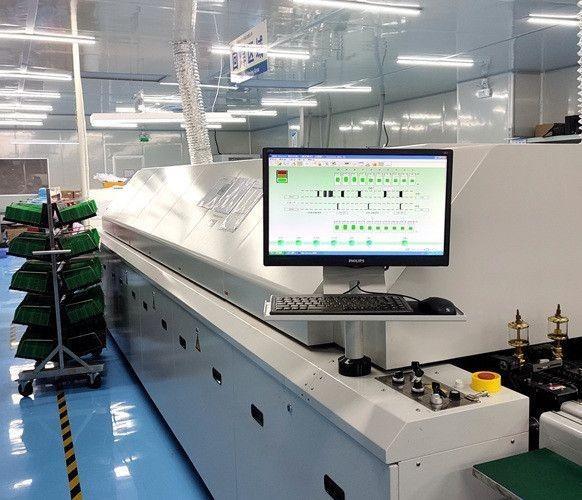
The most common soldering method used in PCB assembly is reflow soldering.
During this process, assembled boards pass through a temperature-controlled oven. The solder paste melts and forms reliable connections between component terminals and PCB pads.
For through-hole components, wave soldering or manual soldering may also be used.
The quality of solder joints significantly influences product reliability and long-term performance.
Strong, defect-free solder connections are essential for maintaining stable electrical operation.
Surface Mount Technology
When exploring what is the PCB Assembly, it is important to understand Surface Mount Technology (SMT).
SMT is the dominant assembly method used in modern electronics manufacturing.
Rather than inserting component leads through holes in the PCB, SMT components are mounted directly onto the board surface.
Benefits of SMT include:
- Higher assembly speed
- Smaller product size
- Increased component density
- Improved automation
- Lower manufacturing costs
Most modern electronic products rely heavily on SMT assembly techniques because they support compact and high-performance designs.
Through-Hole Technology
Although SMT is widely used, Through-Hole Technology (THT) remains important in certain applications.
Through-hole components have leads that pass through drilled holes in the PCB and are soldered on the opposite side.
THT offers strong mechanical connections and is often used for:
- Large connectors
- Transformers
- Relays
- Power components
- Industrial electronics
Many products combine SMT and THT components to achieve optimal performance and durability.
Understanding both assembly methods helps answer the broader question of what is the PCB Assembly.
Inspection and Quality Control
Quality assurance is a critical part of PCB assembly.
Manufacturers perform multiple inspections throughout production to identify and correct defects.
Automated Optical Inspection (AOI) systems examine component placement, polarity, and solder joint quality.
X-ray inspection is used for advanced packages such as Ball Grid Arrays (BGAs), where solder joints are hidden beneath the component body.
Additional testing methods include:
- Functional testing
- In-Circuit Testing (ICT)
- Flying probe testing
These procedures help ensure that assembled boards meet quality standards and customer requirements.
Applications of PCB Assembly
PCB assembly is used in virtually every sector of the electronics industry.
Consumer electronics manufacturers rely on assembled boards for smartphones, laptops, tablets, gaming systems, and wearable devices.
Medical equipment uses PCB assemblies in patient monitoring systems, diagnostic instruments, and imaging devices.
Automotive manufacturers incorporate electronic assemblies into engine controls, safety systems, navigation units, and electric vehicle technologies.
Industrial automation systems depend on PCB assemblies for robotics, controllers, sensors, and monitoring equipment.
Telecommunications, aerospace, defense, renewable energy, and IoT products also rely heavily on advanced PCB assembly processes.
Future Trends in PCB Assembly
The future of PCB assembly is being shaped by technological innovation and increasing product complexity.
Manufacturers are adopting automation, artificial intelligence, and smart factory technologies to improve efficiency and quality.
Emerging trends include:
- High-density interconnect boards
- Flexible and rigid-flex circuits
- Advanced semiconductor packaging
- Automated inspection systems
- Real-time production monitoring
As devices continue to become smaller and more powerful, assembly processes must evolve to support new design requirements.
These advancements will continue to enhance manufacturing capabilities and product reliability.
Conclusion
For anyone asking, “What is the PCB Assembly?” the answer is that it is the process of transforming a bare printed circuit board into a fully functional electronic assembly by mounting and soldering electronic components. This critical manufacturing stage enables electronic devices to perform their intended functions and supports industries ranging from consumer electronics and healthcare to automotive and aerospace. Through advanced technologies such as SMT, automated inspection, and precision soldering, PCB assembly ensures product reliability, efficiency, and performance. Working with an experienced PCB Assembly Partner can help businesses achieve high-quality manufacturing results, reduce production risks, and successfully bring innovative electronic products to market.